



South Africa poised for first rate hike since 2023 on Iran war

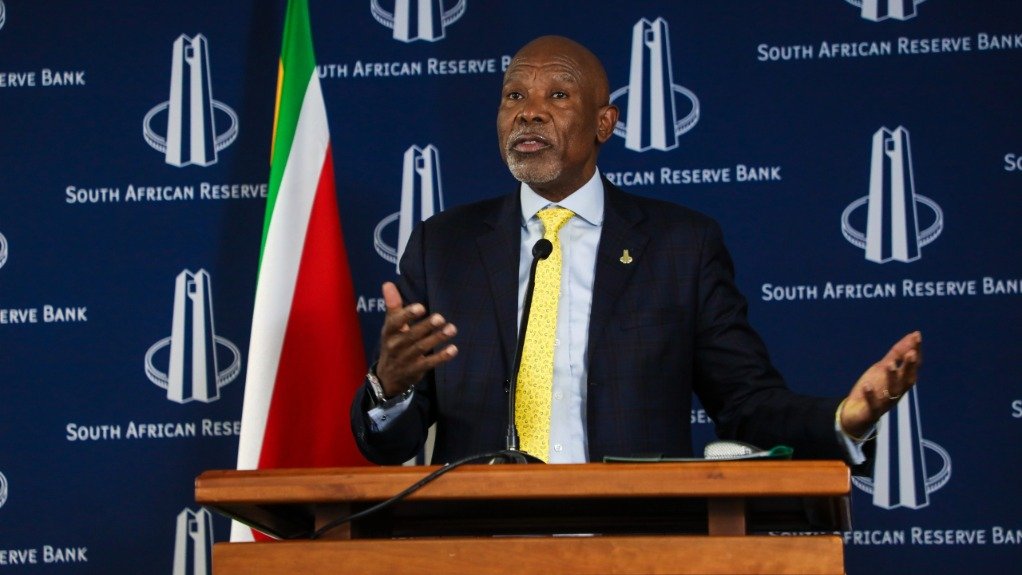


South Africa’s central bank is set to raise borrowing costs for the first time in three years as policymakers seek to combat inflationary pressures stemming from the Iran war, including sharply higher oil prices.
All but one of 19 economists surveyed by Bloomberg forecast Governor Lesetja Kganyago and the five other members of the monetary policy committee to lift the benchmark interest rate by 25 basis points to 7% on Thursday. The decision, due shortly after 3 pm in Pretoria, is expected to be split.
Traders are also pricing in a quarter-point increase on Thursday and at least one additional hike by year-end.
An increase would see South Africa join a handful of central banks, including those in Indonesia and Mauritius, in raising interest rates while most policymakers stand pat to assess the war’s impact on inflation.
With only fuel prices affected so far, no clear evidence yet of second-round effects from the Middle East oil shock, and food inflation remaining subdued, the decision is likely to be a close call, said Andrew Matheny, an economist at Goldman Sachs Group, who expects policymakers to raise the benchmark rate by 25 basis points.
“We expect that the policy statement will be accompanied by alternative scenarios that signal the South African Reserve Bank’s readiness to tighten policy more aggressively in the event of a larger shock and, or deterioration in inflation expectations,” he said.
Fighting erupted in Iran on February 28 and disrupted traffic through the Strait of Hormuz, normally a key shipping route for about a fifth of the world’s seaborne oil and liquefied natural gas, which sent energy costs soaring.
Gasoline prices in Africa’s largest economy were raised to a near four-year high this month, and the authorities have cut levies to cushion motorists against the impact.
Even so, South Africa’s inflation rate climbed to 4% in April from 3.1% in March, its highest level in 20 months. The central bank targets inflation at 3%, with a tolerance band of one percentage point on either side.
Gasoline prices are set to hit a record next month as the government unwinds some of the temporary relief measures introduced after the conflict began.
The central bank is also likely to raise its inflation forecast, which was previously projected to average 3.7% this year, to reflect a higher-for-longer oil price outlook and the prospect of a more protracted war, said Keabetswe Mojapelo, a macroeconomist at Rand Merchant Bank, who expects a 25 basis-point rate increase and sees a larger hike as unlikely.
“The committee will want to look through the initial shock,” Mojapelo said. Policymakers would probably want to see firmer evidence of second-round effects extending beyond transport costs and becoming more broad-based across the inflation basket, he added.
Cartesian Capital takes a contrarian view, predicting the central bank will keep rates unchanged.
The higher inflation rate, now at the upper end of the central bank’s target range, has been driven by exogenous factors that it cannot directly manage, Anthea Gardner, managing partner at Cartesian, said.
“The SARB playbook for supply shocks, historically, has been to look through the first-round impact, watch closely for second-round effects, which we haven’t seen come through yet, and then avoid making these urgent policy changes before there is clear evidence that inflation will in fact remain persistently higher.”
There are other factors narrowing the chance of rate hike. They include improvements in South Africa’s fiscal position, a currency that has remained relatively stable despite the war, and contained imported inflation, said Tertia Jacobs, a treasury economist at Investec.
The shock also “hasn’t spilled over into higher sovereign risk,” she said, citing Moody’s Ratings decision to lift South Africa’s credit outlook to positive from stable.
Article Enquiry
Email Article
Save Article
Feedback
To advertise email advertising@creamermedia.co.za or click here
Research Reports

Projects


Latest Multimedia

Latest News

Showroom

ROSOND provides fast, efficient, safe, and cost-effective drilling and grouting services to mining and exploration industries throughout Africa.
VISIT SHOWROOM
AirNox (Pty) Ltd is a level 1 BBBEE manufacturer of complete AdBlue® solutions for operators of SCR diesel engines and AUS40 across South Africa...
VISIT SHOWROOM



Announcements
What's On
Subscribe to improve your user experience...
Option 1 (equivalent of R125 a month):
Receive a weekly copy of Creamer Media's Engineering News & Mining Weekly magazine
(print copy for those in South Africa and e-magazine for those outside of South Africa)
Receive daily email newsletters
Access to full search results
Access archive of magazine back copies
Access to Projects in Progress
Access to ONE Research Report of your choice in PDF format
Option 2 (equivalent of R375 a month):
All benefits from Option 1
PLUS
Access to Creamer Media's Research Channel Africa for ALL Research Reports, in PDF format, on various industrial and mining sectors
including Electricity; Water; Energy Transition; Hydrogen; Roads, Rail and Ports; Coal; Gold; Platinum; Battery Metals; etc.
Already a subscriber?
Forgotten your password?
Receive weekly copy of Creamer Media's Engineering News & Mining Weekly magazine (print copy for those in South Africa and e-magazine for those outside of South Africa)
➕
Recieve daily email newsletters
➕
Access to full search results
➕
Access archive of magazine back copies
➕
Access to Projects in Progress
➕
Access to ONE Research Report of your choice in PDF format
RESEARCH CHANNEL AFRICA
R4500 (equivalent of R375 a month)
SUBSCRIBEAll benefits from Option 1
➕
Access to Creamer Media's Research Channel Africa for ALL Research Reports on various industrial and mining sectors, in PDF format, including on:
Electricity
➕
Water
➕
Energy Transition
➕
Hydrogen
➕
Roads, Rail and Ports
➕
Coal
➕
Gold
➕
Platinum
➕
Battery Metals
➕
etc.
Receive all benefits from Option 1 or Option 2 delivered to numerous people at your company
➕
Multiple User names and Passwords for simultaneous log-ins
➕
Intranet integration access to all in your organisation
